

Blog

Sky Ford’s Top 5 Tips for New Drivers

A woman with long brown hair sits in a car's driver's seat, smiling and holding up a driver's license towards the camera, conveying a sense of achievement.

Driving is an exciting milestone in life, but it can also be intimidating, especially for new drivers. Navigating the roads as a beginner involves a lot of responsibility, but with proper guidance, it can be a lot easier and more secure. In this blog, we will focus on five tips that can help new drivers stay safe and confident on the road. 

Tip 1: Master the Basics 

Before hitting the road, it is essential to understand the fundamental rules of driving. Start by reviewing your state’s driver’s manual or take an approved driver’s education course. This will help you learn the rules of the road and gain a better understanding of road signs, speed limits, and traffic laws. Knowing the basics ensures that you can navigate the roads with confidence and safety.  

To further master the basics and gain a strong foundation in driving, it is important to practice frequently in various conditions. Make sure to drive in different weather conditions, such as rain or snow, and during different times of day. Additionally, practice on roads with varying speed limits and traffic levels. This will help you become comfortable behind the wheel and stay safe on the road. 

Tip 2: Keep Your Car Maintained 

Regular car maintenance is crucial for a vehicle’s safe operation. Keeping up with oil changes, brakes, and tire rotations are necessary for ensuring that the car is in proper working order. Having a reliable vehicle also means reducing the chance of costly and dangerous breakdowns.  

Having a reliable car is also essential for avoiding any unwanted incidents on the road. Be sure to check your fluids (oil, coolant, brake, and transmission) regularly and top them off if needed. Make sure to have your brakes inspected occasionally, as well as inspect the car’s tires for proper inflation levels and tread wear. 

Tip 3: Avoid Distractions 

Distractions while driving are dangerous, irresponsible, and can lead to accidents. Keep your phone on silent and out of reach while driving. If you need to use your phone, pull over to a safe spot to take the call or reply to a text message. Additionally, avoid eating, smoking, grooming, or engaging in other distracting activities while behind the wheel. 

In order to reduce distractions while driving, it is important to minimize the number of passengers in the car. Having fewer passengers in the vehicle reduces the chances of conversations or other interactions that could take your focus away from driving. Additionally, avoid programming GPS devices or changing radio stations while driving, as these activities require visual and mental attention. 

Tip 4: Don’t Tailgate 

Maintaining a safe distance between your car and the vehicle in front is crucial for a driver’s safety. The recommended following distance is three to four seconds between cars. This ample time will allow you to avoid a collision if the vehicle in front makes any sudden stops or turns. 

Tailgating can be dangerous and should always be avoided. Not only can it lead to rear-end collisions, but it can also cause road rage from the driver in front. Additionally, tailgating restricts vision and forces drivers to make quick decisions in order to avoid a collision.  

Tip 5: Obey All Traffic Rules 

Driving safely and responsibly involves obeying all traffic rules and laws, including stop signs, traffic signals, and posted speed limits. Remember, breaking the rules puts not only your safety but also the safety of other road users at risk.  

When driving, always be aware of the speed limit and the posted signs to ensure that you stay within the laws. Following the speed limit helps prevent speeding tickets and keeps you from putting yourself and other drivers at risk. Additionally, be mindful of intersections and obey any traffic signals, such as stop lights or yield signs. These traffic signals are there to keep you and other drivers safe on the road.  

Get Out and Drive — Safely! 

In conclusion, as a new driver, it is crucial to remain vigilant, patient, and adhere to basic traffic rules. Regular maintenance of your car, avoiding distractions, and maintaining a safe following distance are all essential practices to help ensure safe driving. Remember to never drive under the influence of drugs or alcohol, always wear your seat belt, and enjoy the ride. Following these five tips will make you a more confident and responsible driver. 
Recommended Posts

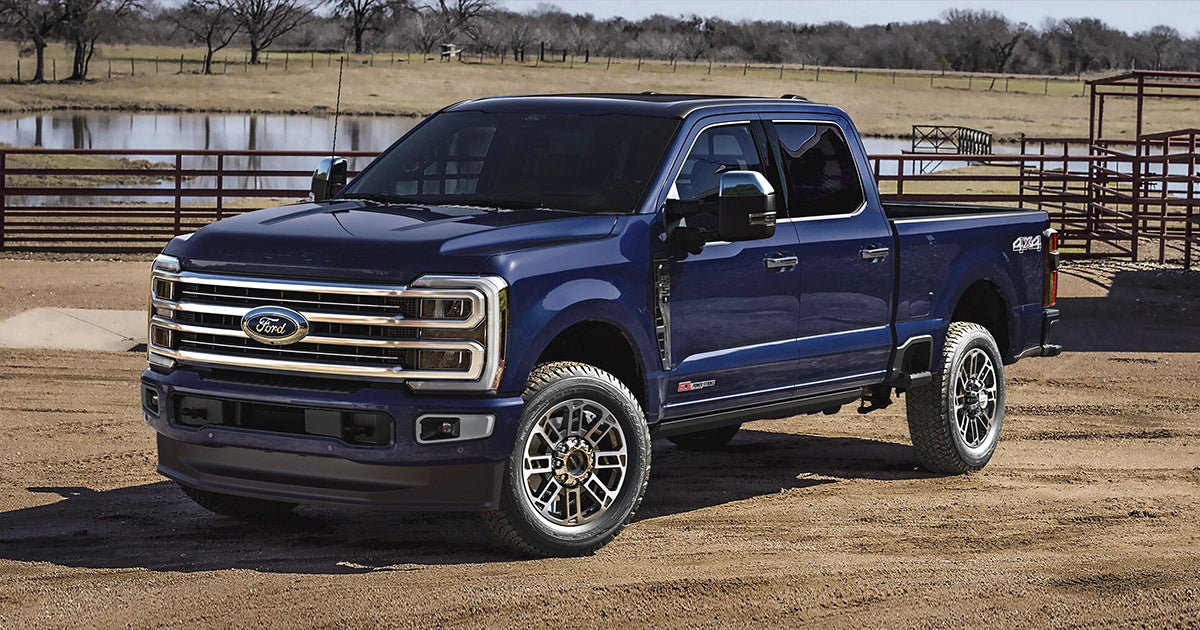
2026 Ford Super Duty Truck.

The F-Series Super Duty is the North America Truck of the Year

We’ve entered the second week of January, but Ford continues to receive year-end awards and accolades. For the fourth year in a row, Ford trucks was recognized by the North American Car, Utility, and Truck awards committee. This year, the 2024 Ford F-Series Super Duty took home the title of North America Truck of the Year. To commemorate the moment, Sky Ford takes an in-depth look at the Super Duty’s latest model – a physical manifestation of the company’s “Built Ford Tough” mindset. Power to the People Approximately 96% of heavy-duty pickup owners utilize their truck’s towing capability. The Super Duty boasts the most eye-opening power specs we’ve seen from a Ford vehicle yet. With its 6.7-liter Power Stroke V8 diesel engine paving the way, the 2024 Super Duty’s towing and hauling specs are as follows: 40,000 pounds of towing. 8,000 pounds of maximum available payload. 500 horsepower. 1,200 lb.-ft. of torque. Designed to Shine The Super Duty is designed to make your daily routine simpler and more convenient, both at your worksite and away from it. Pro Power Onboard lets you charge tools or other electronics via power outlets in the trunk bed – perfect for on-the-spot charging in remote locations. Meanwhile, integrated box-side steps and rear corner bumper steps are built extra wide, enabling you to comfortably climb to the interior or trunk bed. The Super Duty exterior comes with a choice of seven distinct grille designs, each engineered to maximize cooling performance during hauling and towing. The muscular frame holds it all together, a light but durable, military-grade, aluminum-alloy shell. Bookending the body are powerful LED headlights and suave wraparound tail-lamps. Brain in Addition to Brawn The interior is outfitted with the latest modern amenities and technology. The 12-inch, customizable digital instrument cluster conveys important data in beautiful, high-resolution clarity. Together with the available Head-Up Display (HUD), information from driver assist features is projected onto your windshield, within your line of sight, so that you don’t need to take your eyes off the road for any sustained period of time. The infotainment console runs on standard SYNC 4 technology, which manages all your Super Duty tech. With Sync 4, cloud-based connectivity throughout your Super Duty runs seamlessly. With FordPass Connect, drivers have access to a 5G Wi-Fi hotspot, and the Super Duty also supports both Apple CarPlay and Android Auto. And of course, Ford’s Co-Pilot360 technology offers the latest in increasingly important driver-assist features, including: Pro Trailer Backup Assist 360-Degree Camera System BLIS Adaptive Cruise Control Intersection Assist Pre-Collision Assist Pro Trailer Hitch Assist Put Yourself in a Ford Truck Today Sky Ford is Center Point’s home for all your Ford pickup needs. From the Super Duty to the F-150 to the Maverick, your perfect Ford truck awaits. And whether you need new tires, brakes, or an oil change, you can schedule your service now and drive confidently into the new year. Make 2024 the year you embrace raw power; get yourself behind the wheel of the award-winning Super Duty today. Experience firsthand why F-Series pickups are America’s best-selling trucks 46 years straight.

Close-up of a car tire on a snowy road. The tire's tread is clearly visible, surrounded by fresh snow. The scene conveys a sense of winter travel.

A Simple Guide to Purchasing Winter Tires

Although we’re now well into December here in Center Point, temperatures have mercifully held above freezing for the time being, and winter precipitation has been minimal. With that in mind, this is an ideal opportunity to purchase a set of snow tires for the conditions that await us. As a great philosopher once said, “ winter is coming.” What’s the Difference Between Regular Tires and Winter Tires? As you might have guessed, winter tires provide significantly more traction in ice, sleet, and snow. This is due to both the tire compound (i.e., rubber and silicone) and the tread patterns that allow for greater flexibility on slick surfaces. In fact, winter tires are designed to move water, as they melt the top layer of snow and ice when pressing down on it. Conversely, “regular” or summer tires can actually freeze up during the winter months, leading to decreased performance, a higher chance of deflation, and other maladies that could lead you to a stop at our Service Center. How Do I Know What Winter Tires Are Right for My Vehicle? Choosing the right winter tire relies largely upon choosing the right size. Conventional wisdom would tell you that wider tires equal better traction. But when driving through snow, narrower winter tires are often more effectively able to cut through to the ground. As always, when it comes to the exact size of your tires, it’s best to consult your owner’s manual. Perhaps the most important thing to look for when purchasing winter tires is the three-peak mountain snowflake symbol. Think of this emblem as a seal of approval and badge of honor rolled into one. When it’s stamped on your tires, you know you’re good to go in the snow. Are Winter Tires Worth It? Quite simply, yes. We know it can be frustrating to have to open your wallet due to seasonal conditions. But with the increased risk that summer tires take on in winter months, there’s no guarantee you won’t be in the market for a new set of tires come spring anyway. Plus, the old adage that “you can’t put a price on safety” remains with us for a reason. Holding off on buying winter tires is a gamble that puts both yourself and your loved ones as risk, and that’s not one worth taking. Don’t Skid into the New Year Purchasing tires can seem like a hassle regardless of the time of year, but the experience is made effortless with the tire professionals here at Sky Ford. When you come to us for your tire service needs, you’ll ensure that you soar – not skid – into 2024.

Old Ford factory with parts and sections of old vehicles all around.

Five Ford Innovations that Changed the Game

We all know the story by now. No, Henry Ford didn’t invent the automobile – he merely perfected it to such a degree that he might as well have. That said, the founder of Ford Motor Company didn’t lack for game-changing inventions and innovations. From Henry Ford’s early twentieth century run that established modern practices of mass production and employee benefits, to newer applications such as blind spot technology, Ford has always been at the forefront of cutting-edge thinking. Today, Sky Ford takes a deeper look at the five most consequential ways Ford has changed the landscape of the auto industry. Moving Assembly Line & Mass Production Automobile manufacturing would never be the same following Ford’s implementation of the moving assembly line. By using a conveyor belt, Ford assembly plants were able to efficiently move the product to the worker, rather than having employees scramble around facilities. After much trial and error, the process was perfected at the Highland Park assembly plant in 1913. Soon, new automobiles were being fully assembled in just 90 minutes. In addition, Ford introduced standardization, which reduced production costs and increased efficiency by utilizing standardized parts that could be used on different models. Model T The original game-changer of the auto world. The Ford Model T was mass produced from 1908 to 1927. In that span, it established itself as the first mass-affordable automobile, resulting in car travel becoming available to middle-class America. Thanks to savings stemming from mass production, the average price of the Model T dropped from $780 in 1910 to $290 in 1924 – a truly staggering number when adjusted for inflation. Thanks to the moving assembly line and its interchangeable parts, the Model T (also known as “the Tin Lizzie”) became the most ubiquitous vehicle in the world by an absurd margin. By the early 1920s, more than half of registered automobiles throughout the world were Fords, with over 15 million Model T’s built and sold during that span. $5 Wage / 5-Day Workweek When Henry Ford proposed in 1914 that all Ford employees be compensated at five dollars per workday, it sent a shock wave through the working community – and for good reason. Five dollars per day translates to $153 per day by today’s standards, after adjusting for inflation. That’s good for $19 an hour, well above 2023’s federal minimum wage of $7.25. Then, in 1926, Ford introduced another now-standard workplace practice with the five-day workweek. Though it was driven by the expectation that worker productivity would increase if given more leisure time, Ford also believed giving workers more time to purchase and consume goods would be good for business. The idea passed the test of time; nearly a century later, we’re still looking at ways to further expand on Ford’s vision and bump the workweek down to four days… The Tri-Motor Plane One of the great “What If’s” in automotive history is the Ford Airplane Division, which shut down in 1933 due to the Great Depression. When Ford entered the aviation business during World War I, all they did was introduce the Tri-Motor Plane, an aptly-named, three motor plane that became the United States’ first successful passenger airliner. You can’t help but wonder what Ford could have further accomplished in the aviation space if they hadn’t been forced to cut bait in the 30’s. Unfortunately, in this case, the sky was literally the limit. Blind Spot Monitoring For decades, drivers changed lanes with the aid of three rear mirrors and their own intuition. That changed with the introduction of Ford’s BLIS (Blind Spot Information System). BLIS is responsible for detecting vehicles in your blind spot and alerting you to their presence. It has since paved the way for a plethora of modern collision-avoidance technology. While Volvo was technically the first manufacturer to introduce this feature to the public, Ford’s 1995 concept car, the GT90, was the first vehicle fitted with modern blind spot technology. Ford unveiled its version of blind spot monitoring to a mass audience in 2009 with the 2010 Ford Fusion and Fusion Hybrid. Reinvent Your Driving Future Ford continues to innovate to this day and are currently focused on expanding the reach of EV technology. With plans to put over 40 EVs and hybrid models on the road within the next few years, Ford’s next step seems to be the complete electrification of the majority of its fleet. For instance, at Sky Ford you can check out the Mustang Mach-E, an electric SUV with an EPA-estimated range of 310 miles. But you don’t need to reinvent the wheel before you’re prepared to do so; our Service Center is here to handle all your brake, battery and oil change needs to keep your current ride humming into the new year and beyond.